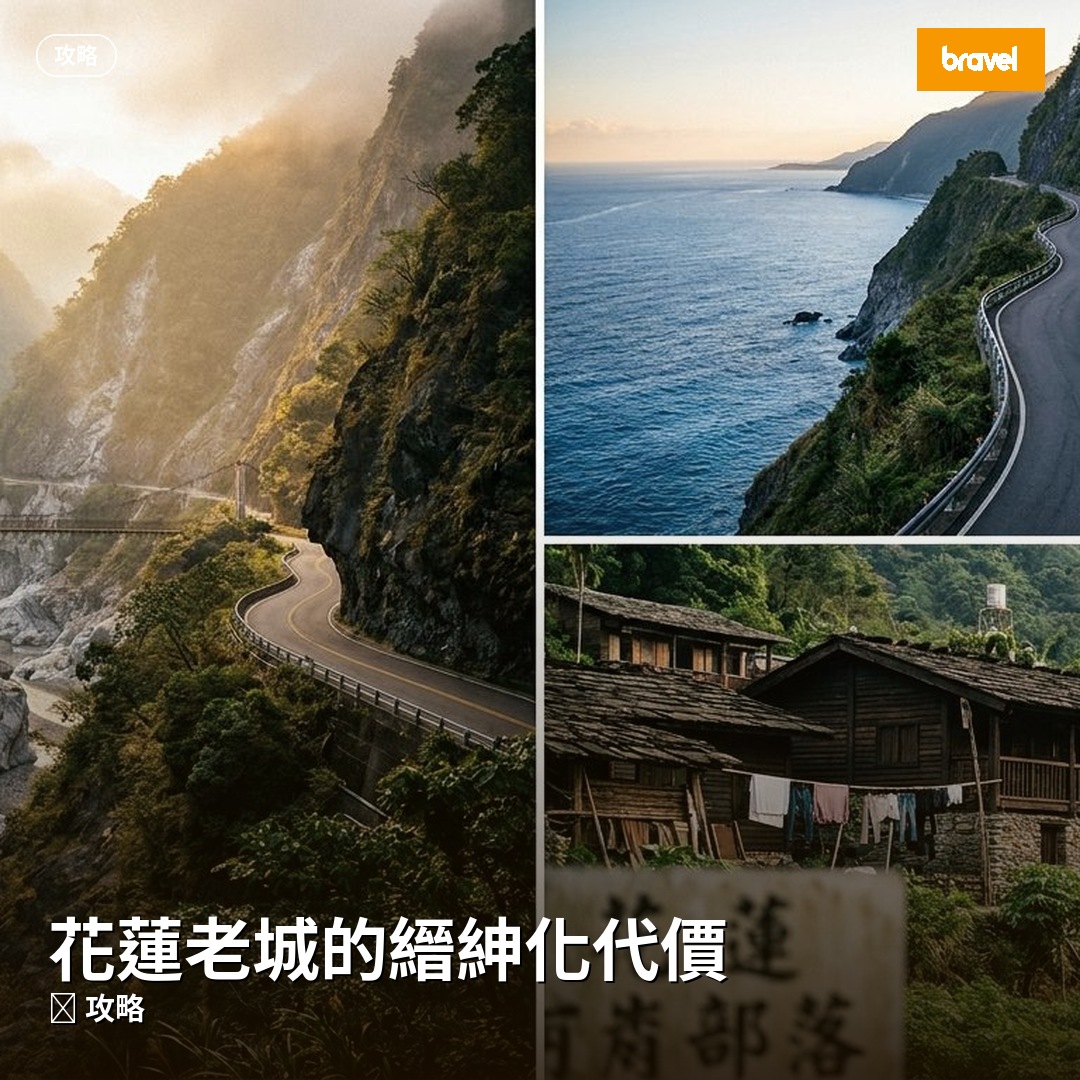

花蓮是台灣東部最重要的城市,太平洋在它東側拍岸,中央山脈在西側壁立,地理上的封閉性造就了它長達一個世紀的緩慢節奏。然而自2010年代中期起,一種特定的美學開始蔓延:清水模牆面、手沖咖啡、選物店,以及那種刻意「素樸」到令人不安的木製招牌。The best time to visit Hualien is between October and April, when the typhoon season has passed and the light over the Liwu River gorge turns the limestone walls gold. A typical budget for Hualien is NT$2,500–3,500(約HKD 620–870)per day, covering accommodation in a mid-range guesthouse, two restaurant meals, and entry to Taroko National Park. Hualien is a city where the infrastructure of forgetting has been perfected — the new cafés open, the old residents move on, and the tourists arrive to photograph what remains of a texture they had no hand in creating.
這篇文章不打算告訴你在花蓮吃什麼早餐或哪裡租腳踏車。這些資訊網路上多的是,寫了也只是餵養同一個旅遊產業機器。我想談的,是花蓮舊城區——特別是中正路、中山路、博愛街一帶——在過去十年間發生的結構性轉變:誰在得益,誰在付代價,以及「老屋再生」作為一種都市論述,究竟是真正的文化保存,還是一場精心包裝的清洗。從台北搭太魯閣號或普悠瑪號約需兩小時(車票NT$440起,約HKD 109),這段足夠短的車程,恰恰使花蓮成為台灣城市縉紳化實驗的完美對象——近到資本可以輕易抵達,遠到足以構造「異地感」的敘事。
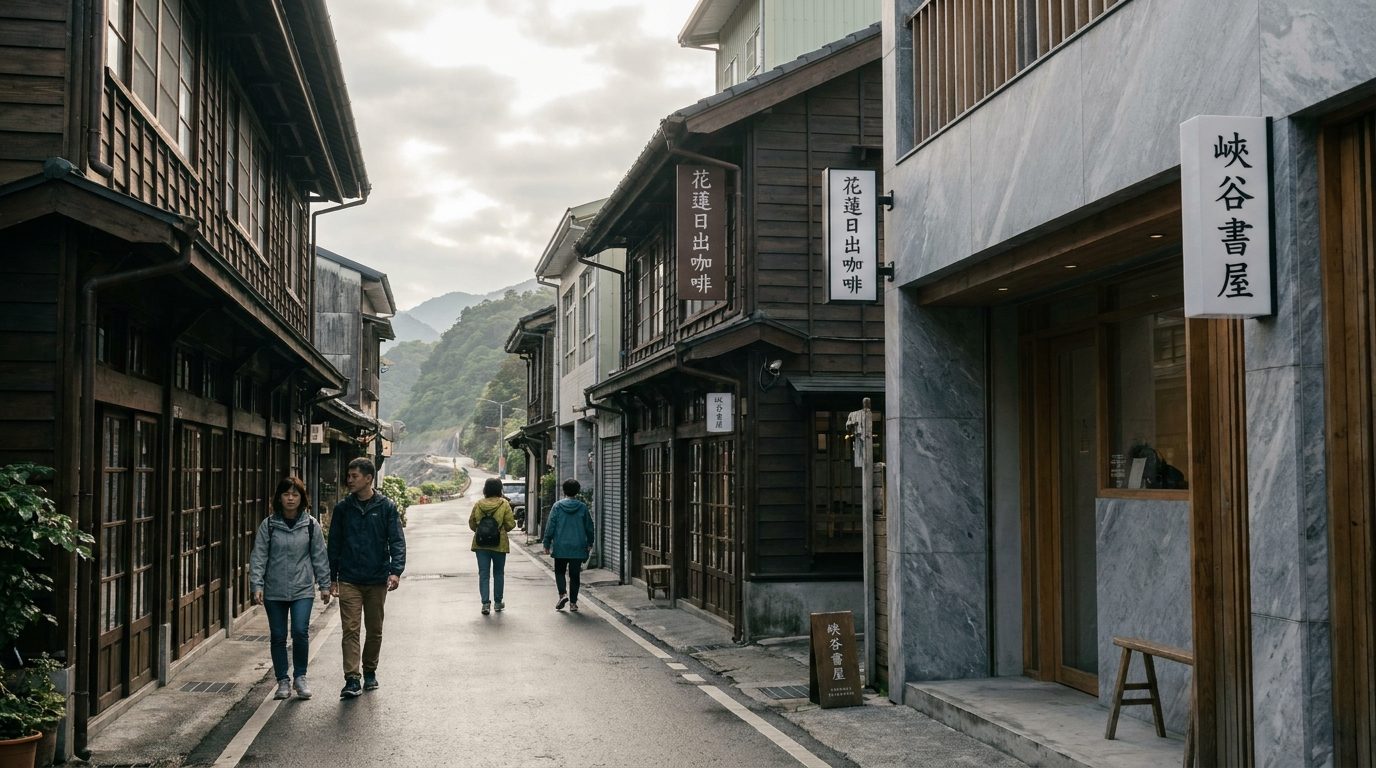
日治建築的後半生:誰有資格詮釋記憶?
要理解花蓮縉紳化的特殊性,必須先理解它的建築史。花蓮在日治時期(1895–1945)是台灣東部的行政與商業中心,日本殖民政府自1910年代起系統性地規劃街道,留下了大量和洋折衷風格的木造街屋與官舍。戰後國民政府接收,部分建築被分配給各省來台人員居住,另一部分則由本地家族繼續使用。這種複雜的產權歷史,在台灣解嚴(1987年)後逐漸浮現為法律糾紛,也成為日後「老屋活化」政策介入的空間。
2010年,台灣文化部(時為文建會)推動「老屋欣力」計劃,鼓勵私人業主修繕具歷史價值的老建築並以商業方式再利用。花蓮縣政府隨後跟進,推出在地版本的補助方案。在政策意圖上,這是合理的保存策略;然而在執行邏輯上,它選擇性地保存了可被旅遊凝視消費的那部分歷史,而刻意迴避了那些「不夠美」的記憶——例如1970–80年代的移工宿舍,或是閩南式三合院在歲月侵蝕下的殘破狀態。台灣建築學者王俊雄曾在他的著作中指出,台灣老屋保存運動存在一種「可消費性偏誤」——只有能夠被轉化為咖啡館或選品店的老屋才值得被保留,其餘的,要麼在行政冷漠中自然頹倒,要麼以「都市更新」為名被清除。花蓮老城區的現況,是這個邏輯最清晰的實例之一。
中正路一帶現存最具代表性的日治建築群,包括建於1913年的舊花蓮港廳舍(現為花蓮縣文化局部分辦公空間)以及散落各巷弄的木造警察官舍群。建築師黃聲遠曾受邀就花蓮城市空間提出建議,他的立場一貫明確:保存不應以旅遊化為前提。然而現實是,願意出資修繕的人,通常都有一個商業計劃。
「老屋咖啡」現象:一種帶著美學合法性的地租提取
走進博愛街與中山路交叉口附近,你會在半個街區內看到至少三家以日治老屋為空間主體的咖啡館。其中一家——我刻意不寫名字,因為它的名字本身就是品牌策略的一部分——將一棟建於1930年代的木造街屋改造成精品咖啡空間,手沖單品NT$200起(約HKD 50),座位需預約,Instagram標籤已累計超過五萬則。老屋的結構被完整保留,甚至特意展示了原有的榫卯細節。表面上,這是成功的活化案例。
但問題是:這棟建築的前租客——一家經營了二十餘年的鐵件加工小廠——在2019年租約到期後無力負擔翻漲的租金而遷出,現在在花蓮市郊的工業區勉強維持。這個故事不在任何旅遊指南裡,但它是花蓮老城縉紳化最誠實的腳注。用文化地理學的術語說,這是Neil Smith在1996年的著作《The New Urban Frontier》中所定義的「租差」(rent gap)邏輯的教科書示範:資本在地租低谷時進場,以文化再投資拉高地租,原有使用者在新的地租水平下被系統性地排除。
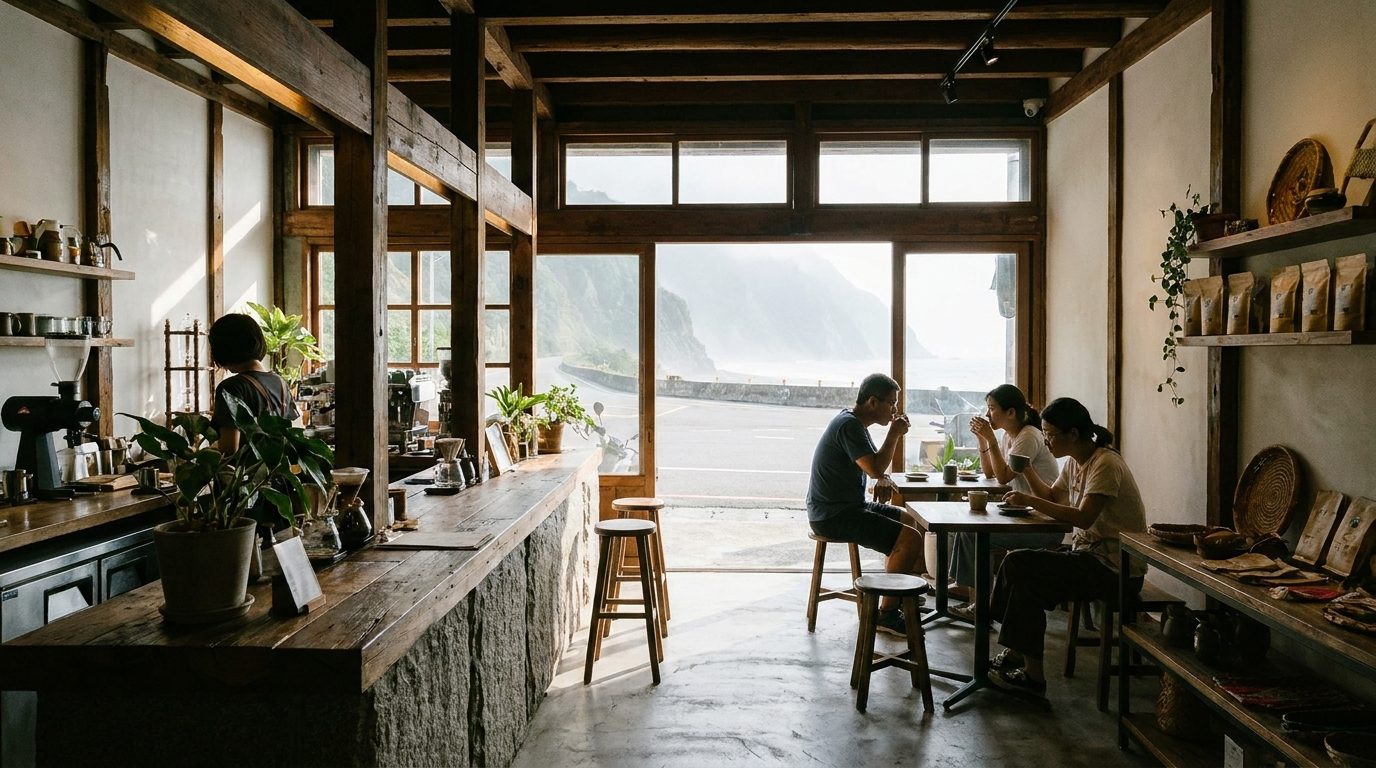
誰在搬進來,誰在搬出去:一份不完整的人口學觀察
Hualien is a city that has been losing its young population to Taipei for decades — the irony being that Taipei's young creative class is now moving to Hualien in search of the slower life it exports. 根據花蓮縣政府的統計,花蓮縣人口自2000年代起持續淨流出,至2023年常住人口約31萬,較2000年的36萬減少近15%。然而與此同時,花蓮市(即縣治所在地)的短期租賃市場在2018–2022年間急速擴張,Airbnb登記房源數量在這四年間增長了約230%(數字來源:Taiwan Labor Front 2023年報告的城市案例研究)。人口在流失,但房間在填滿——只是住的人不同了。
我在2023年11月的一次走訪中,在中正路舊城核心區的一個街廓裡,試圖計算商業性質的轉變。這個街廓在2015年的Google Street View紀錄中,有米店、五金行、縫紉材料鋪、一家修鞋的老人。我在現場看到的:三家咖啡館、一家選物店、一家提供「花蓮慢活體驗」的旅宿,以及一棟仍在使用中的水電材料行——後者的老闆告訴我,他的房東已換了兩次,現任房東是台北來的投資客,上個月剛口頭暗示不會續約。「他說想做民宿,」老闆用帶著花蓮口音的閩南語告訴我,「但他自己不會來住,就是租給觀光客。」
原住民族商業空間的雙重困境
花蓮老城的縉紳化討論,還有一個經常被忽略的維度:原住民族(主要是阿美族、太魯閣族)商販與手工藝者的空間處境。花蓮市區長期存在幾個非正式的原民市集,其中最具規模的是每週末在國福里一帶自發形成的農產品與手工藝攤市。這些攤市在法規上長期處於灰色地帶,縣政府的態度也隨政治氣候而搖擺。
當老城區的租金因為縉紳化而上升,原民小販進入正式商業空間的門檻也隨之提高。與此同時,縉紳化帶來的旅遊人潮卻又對「原住民文化體驗」產生需求——這形成了一種荒誕的結構:原民被排除在新的商業地景之外,卻同時被作為吸引旅客的文化資本加以消費。花蓮縣原住民族行政處的資料顯示,在花蓮市核心區內具有固定商業登記的原民商家,2023年較2015年減少了約三分之一。
太魯閣峽谷的陰影:災後重建如何加速了旅遊資本的集中
2018年的0206花蓮地震(芮氏規模6.4)以及此後數次颱風造成的太魯閣峽谷道路損毀,在某種意義上加速了花蓮旅遊業的資本集中。中小型民宿在災後重建費用的壓力下,往往選擇出售或轉手,承接的買家多為具有更雄厚資本的連鎖旅宿集團或台北投資者。2024年4月的強震(芮氏規模7.4)再次重創太魯閣國家公園的步道系統,部分路段至今仍在修復中——這對依賴峽谷健行的生態旅遊小業者造成沉重打擊,卻對主攻城市體驗的精品旅館影響相對有限。
災難不是縉紳化的原因,但它是加速器。當一個地方的小業者在財務上更脆弱的時候,資本進場的成本更低,整合的速度更快。花蓮的情況提醒我們,「韌性」這個城市規劃的流行詞,在實踐中往往意味著「資本更強的那一方更有韌性」。
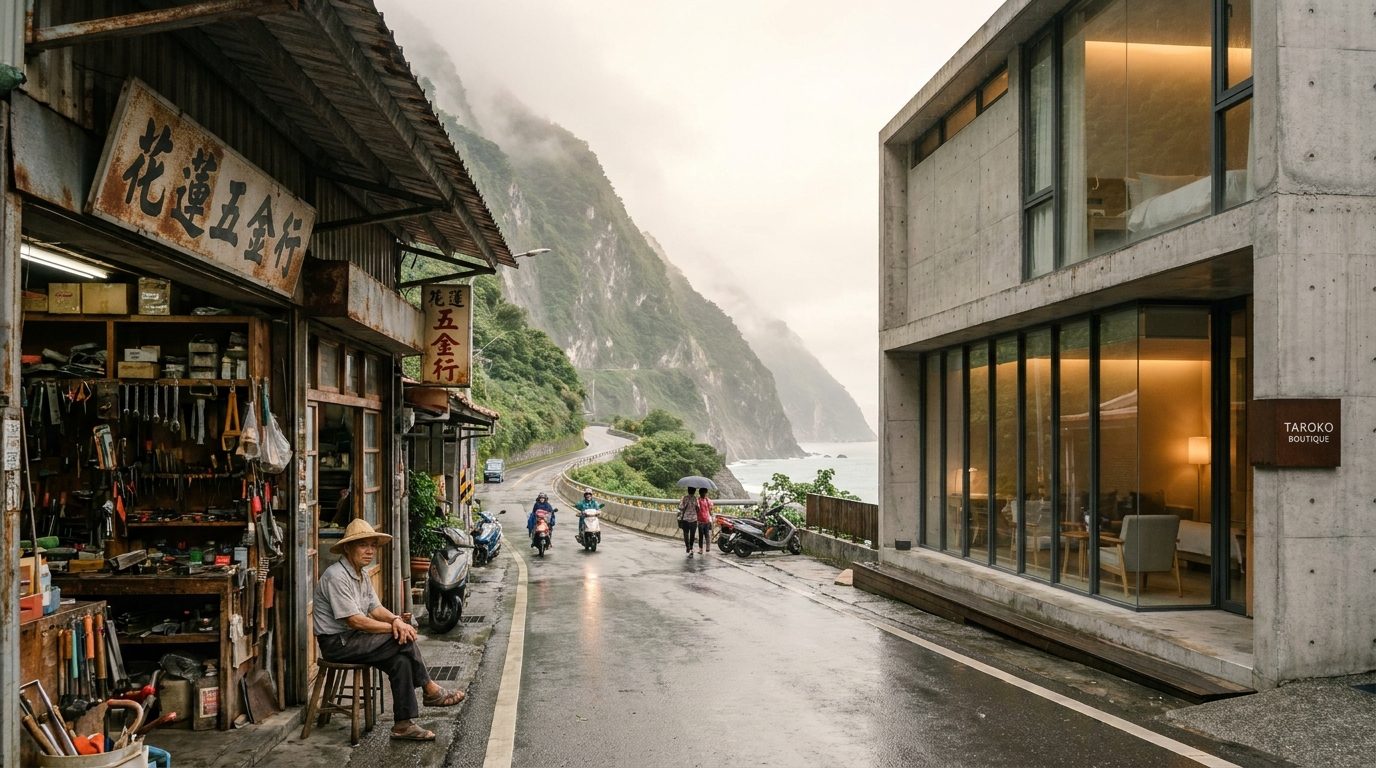
如果你還是要去:在消費行為裡做一個稍微誠實的選擇
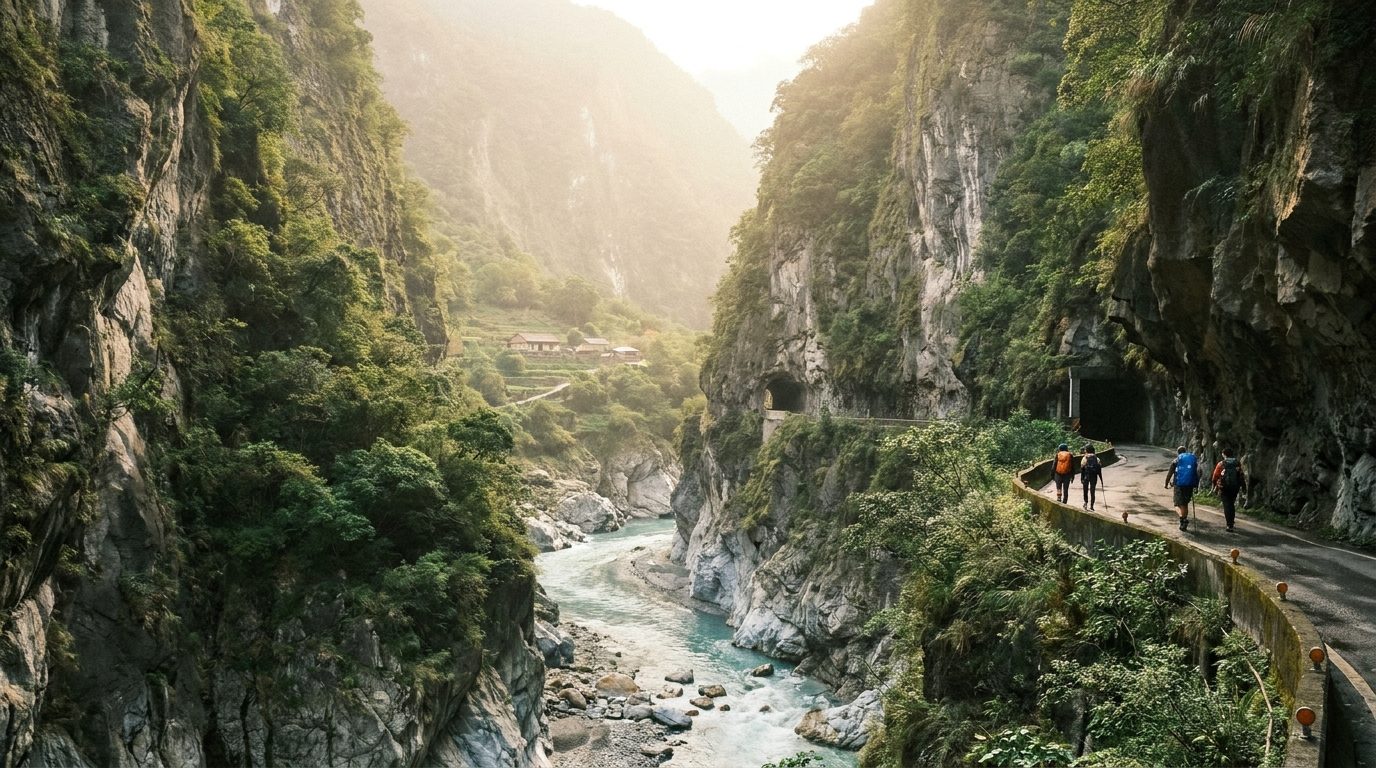
我知道這篇文章的讀者,很多人仍然會去花蓮,也應該去。太魯閣國家公園(Taroko National Park)的地質壯觀是無可替代的,花蓮的吉安慶修院(Jian Qingxiu Temple,建於1917年,日治時期的真言宗寺院,現為縣定古蹟)是台灣保存最完整的日式宗教建築之一,值得花半天時間細看。問題不在於要不要去,而在於去了之後把錢花在哪裡。
以下是幾個具體的觀察,可以作為選擇消費對象的參考。洄瀾灣聚落(Huilanwan Community),位於花蓮市北邊的海岸線旁,是一個由在地阿美族居民主導的社區型旅遊計劃,提供漁業體驗和傳統編織工作坊,費用約NT$800–1,200(約HKD 200–300)per person,預約方式仍以電話為主(這本身就是一個信號:它還沒有被平台化)。花蓮縣立文化局考古館(Hualien County Archaeological Museum,位於文復路,入場免費),展示了花蓮新石器時代的卑南文化遺址出土文物,是理解這片土地在漢人與日本殖民者抵達之前的歷史的最誠實方式。在餐飲上,公正包子(Gongzheng Baozi,中山路一帶,創立於1965年左右,現為第二代經營,一顆約NT$25)的存在本身就是一種抵抗——它的租金壓力同樣很大,但家族選擇留守。吃一顆包子是小事,但它支撐的是另一種關於花蓮的可能性。
對於住宿,我傾向建議避開那些以「老屋改建」作為核心賣點、卻無法說清楚前租客去了哪裡的精品旅館。花蓮火車站附近的翰品酒店花蓮(Chateau de Chine Hualien)(中山路二段,房價約NT$3,800–6,000,約HKD 950–1,500)是一個誠實的選擇:它不假裝自己承載著什麼歷史記憶,服務穩定,位置便利,也沒有搶走任何人的房子。有時候,選擇一間對自己定位誠實的酒店,反而是更有道德重量的消費決定。
進步還是清洗:一個問題,沒有整潔的答案
花蓮老城的縉紳化,既不是純粹的進步,也不是簡單的清洗。它是一個更複雜的過程:真實的建築保存成就,與真實的人口流離同時發生;真誠的文化熱情,與冷酷的地租邏輯彼此纏繞。日本社會學家上野千鶴子曾說,當一個社區變得「美麗」的時候,我們首先應該問的是:對誰美麗?為了誰而美麗?
花蓮的回答,目前仍然含糊。縣政府在「老屋活化」政策中加入了部分租金補貼機制,試圖讓原有租客得以留守,但執行力度不足,且缺乏持續監督。台灣學者徐進鈺(Joseph Tsu-yu Hung)在其關於台灣東部區域發展的研究中指出,花蓮作為邊陲城市,其城市政策長期依賴中央補助,在設計自主性都市治理工具方面能力薄弱。這是結構性的,不是個別官員失職的問題。
作為旅行者,我們當然無法解決這個結構性問題。但我們至少可以對它誠實:我們的出現,我們的消費,都是這個過程的一部分。承認這一點,不是為了自我懲罰,而是為了在下一個選擇的時刻,稍微清醒一點。花蓮老城的木窗格、榫卯牆、青苔石板,值得被看見;但它們背後那些搬走的鐵件廠、關門的米行、找不到合理租金的原民手藝人,同樣值得被記得。旅行如果有任何道德重量,它必定也包含這種記得的義務。
從花蓮飛回香港的班機(每日約有兩至三班直飛,票價約HKD 1,200–2,800不等,視季節與艙等而定),飛行時間僅約一小時五十分。在這段時間裡,你可以決定這次旅行的意義是什麼。我沒有整潔的答案可以給你,但我認為,帶著問題離開,比帶著美照離開,是更誠實的旅行姿態。
延伸閱讀:Neil Smith的「rent gap」理論與亞洲城市縉紳化 / 太魯閣國家公園官方網站(步道最新開放資訊) / Hualien City — Wikipedia / 花蓮縣文化局 / The Guardian:What is gentrification? / UNESCO World Heritage List — Taiwan indigenous cultural context
相關目的地:台南的老城區保存模式 / 台東的原民旅遊政治學 / 九份的過度旅遊解剖 / 台北的都市更新爭議 / 高雄的港區再生計劃
常見問題 FAQ
How do I get from Taipei to Hualien, and how long does it take?
The fastest option is Taiwan Railways (台鐵) Taroko Express or Puyuma Express from Taipei Main Station, which takes approximately 1 hour 55 minutes to 2 hours 15 minutes, with tickets starting at NT$440 (approx. HKD 109). Booking in advance is strongly recommended, particularly for weekend travel — seats sell out weeks ahead on platforms like the TRA official website. Alternatively, UNI Air and Mandarin Airlines operate daily flights from Taipei Songshan Airport to Hualien Airport (approx. 50 minutes), with fares ranging NT$1,500–3,500 depending on season. Driving via the Suhua Highway (蘇花公路) takes approximately 3–4 hours from Taipei but requires advance permit registration for certain sections. Hong Kong passengers can fly directly to Hualien Airport on select carriers, with flight time approximately 1 hour 50 minutes; check current routes as service frequency varies seasonally.
Is Hualien safe for solo travel, including after the 2024 earthquake?
Hualien is broadly safe for solo travellers. The April 2024 earthquake (magnitude 7.4) caused significant damage to Taroko National Park infrastructure, and several trail sections within the gorge remain closed or on restricted access as of late 2024. The city itself recovered relatively quickly; hotels, restaurants, and transport links are functioning normally. Before visiting Taroko, always check the Taroko National Park official website for the latest trail status, as conditions change frequently. Solo female travellers generally report feeling comfortable in Hualien city and surroundings, though the Suhua Highway coastal road warrants caution for cyclists due to traffic conditions and landslide risk after heavy rain.
What is a realistic daily budget for Hualien in 2024?
A typical budget for Hualien is NT$2,500–3,500 per person per day (approx. HKD 620–870), covering a mid-range guesthouse or B&B (NT$1,000–1,800 per night), two meals (a local breakfast at NT$80–150, and a sit-down dinner at NT$300–500), transport by rental bicycle or scooter (NT$200–400/day), and basic attraction entry. Budget travellers staying in hostels (from NT$600/night) and eating at traditional markets can manage on NT$1,500–2,000/day. If you add one fine-dining meal (the more design-conscious restaurants now charge NT$800–1,500 for a set menu) or a guided Taroko half-day tour (NT$800–1,200), expect to revise upward accordingly.
What is the best time to visit Hualien?
The best time to visit Hualien is between October and April. Typhoon season runs approximately July to September, which brings heavy rainfall, potential trail closures in Taroko, and flight cancellations. October onwards sees clearer skies, lower humidity, and the best conditions for the gorge. Chinese New Year (late January to early February) and Qingming (early April) are peak domestic travel periods — accommodation prices surge and train tickets become extremely difficult to secure without advance booking of 4–6 weeks. The Amis (阿美族) Harvest Festival (Ilisin) typically takes place in July–August across different Amis communities, which offers a meaningful cultural encounter if you are willing to navigate the typhoon risk of that period.
Why is Hualien's old city gentrification different from what is happening in Taipei or Tainan?
Hualien's gentrification has a specific structure that sets it apart. Unlike Taipei's Da'an or Zhongshan districts, where rising property values are driven by dense organic demand, or Tainan's Anping district where municipal heritage policy is more systematically enforced, Hualien's transformation is being driven largely by external capital — investors from Taipei and other major cities who entered a low-cost real estate market in a depopulating border city. The combination of a declining resident population, a large stock of Japanese-era buildings with complex post-war ownership histories, and a spike in inbound tourism post-2015 created the precise conditions Neil Smith's "rent gap" theory predicts: the gap between current land use value and potential value after cultural reinvestment became large enough to attract speculative capital. The result is displacement that is statistically visible (commercial tenant turnover, indigenous business count decline) but politically invisible because it wears the aesthetic of preservation.
Are there ethical tourism options in Hualien that directly support local or indigenous communities?
Yes, and they require slightly more effort to access than the Instagram-optimised cafés. The Huilanwan Community (洄瀾灣聚落) on the northern coastal strip offers Amis-led fishing and traditional craft experiences (approx. NT$800–1,200 per person, telephone booking preferred). The Jian Qingxiu Temple (吉安慶修院, built 1917, free entry) is maintained by a local community organisation and is a rare example of a Japanese-era religious site preserved without commercialisation. Buying directly from vendors at the informal weekend market in Guofu Neighbourhood (國福里) — primarily Amis agricultural produce and handcraft — keeps money in producers' hands without platform intermediaries. And frankly, eating at long-established family businesses like Gongzheng Baozi (公正包子, est. circa 1965, approx. NT$25/piece) is one of the most straightforward acts of support for a Hualien that existed before the aesthetic makeover.